


I was on holiday recently, trying my best to disconnect, but the news out of the Middle East, the Iran war, made that impossible. I ended up pulling out my laptop, crunching some numbers, and building a few economic models to see exactly how bad this could get for us here at home.
Because let’s face it: the collective sigh of relief we breathed at the end of 2025, when the MMA reported that inflation had dropped to an incredible 0.4%, is completely gone now. The global landscape has shifted violently in just a few weeks. A sudden start of the Iran war and the escalation in the Middle East are disrupting oil supplies, and at the same time, global travel is taking a hit, threatening our tourism revenues.
For an island nation that imports almost everything it consumes, this is the perfect storm. We’re looking at a classic “Dual Shock.” Here is what the maths is telling us and what it actually means for your household budget this year.
Shock 1: The Oil Spike
First, there’s the obvious one: global energy markets. With Brent crude shooting past $110 a barrel, the cost of bringing energy into the Maldives has skyrocketed.
Economists call this cost-push inflation, but on the ground, the reality is much simpler. Fuel is the lifeblood of our supply chain. The moment STO and FSM pay more for wholesale diesel, it costs more to run a fishing boat, keep a local island generator running, or put goods on a supply ferry to the atolls. That ripple effect is almost instant.
Shock 2: The Dollar Squeeze
Then there’s the second blow. The war is messing with global travel, and any forecasted dip in tourist arrivals directly chokes off our US dollar supply.
We all know the official MMA rate is pegged at 15.42 MVR. But ask any local business importing food or building materials what they actually pay. When the banks can’t supply enough dollars, importers are forced into the black market. They pay a massive premium to get the currency they need, and they pass that extra cost straight to us at the checkout counter to protect their margins.
Under the Hood: The Math
If you want to see how I modeled this out, I used an “Augmented Phillips Curve”: a standard tool for highly exposed, small open economies like ours. The math looks like this:
In plain English, here is the breakdown of the above formula. Basically, tomorrow’s prices depend on four main things:
1. Past Inflation:
The jump in global oil prices:
\(P_{o,t}^*\)Local demand:
\(\tilde{y}_t\)And here comes the real kicker.
Our effective exchange rate:
\(E_t\)
Because we can’t pretend the official 15.42 rate is the only one that matters, the model has to calculate the “effective” rate using this formula:
Here:
is the bank rate. And,
is the black market rate. The,
is just the share of dollars actually available through the banks.
As tourism drops, that share shrinks. Businesses are forced to buy more expensive black-market dollars, driving the effective rate up. The effective rate in the formula is:
This usually hits our wallets in three distinct waves:
Immediately: Retail petrol and diesel prices get hiked.
Within 1-3 Months: Maritime freight and fisheries operating costs surge. Sending anything between atolls gets noticeably more expensive.
Within 3-6 Months: Shops and businesses have absorbed all the electricity and logistics hikes they can handle. They pass the rest on, meaning your weekly grocery run suddenly costs a lot more.
Where Are We Heading in 2026?
Plugging our December baseline and the current constraints into the model, I’m looking at two main trajectories for the rest of the year:
Scenario A: The Moderate Squeeze. If oil calms down around $110/bbl and tourism only takes a slight hit (say 10-15%), the MMA can probably manage the dollar rationing. It won’t be fun, but it’s survivable. The combined pressure of expensive fuel and a mild black market premium will likely push headline inflation between 7.5% and 9.5% by year-end.
Scenario B: The Stagflation Threat. This is the ugly one. If crude keeps climbing toward $130 or $150 and tourists decide to stay home (a drop of over 25%), the black market dollar rate could easily break 20 MVR. That triggers stagflation. The economy stalls out, but prices explode anyway. We’d be looking at inflation hitting 12.0% to 18.0%, leading to acute spikes on basic, essential goods.
Let’s Do the Math on Your Next Grocery Bill
Let’s take this out of the macroeconomic clouds and bring it right down to the checkout counter at your local Redwave or corner shop.
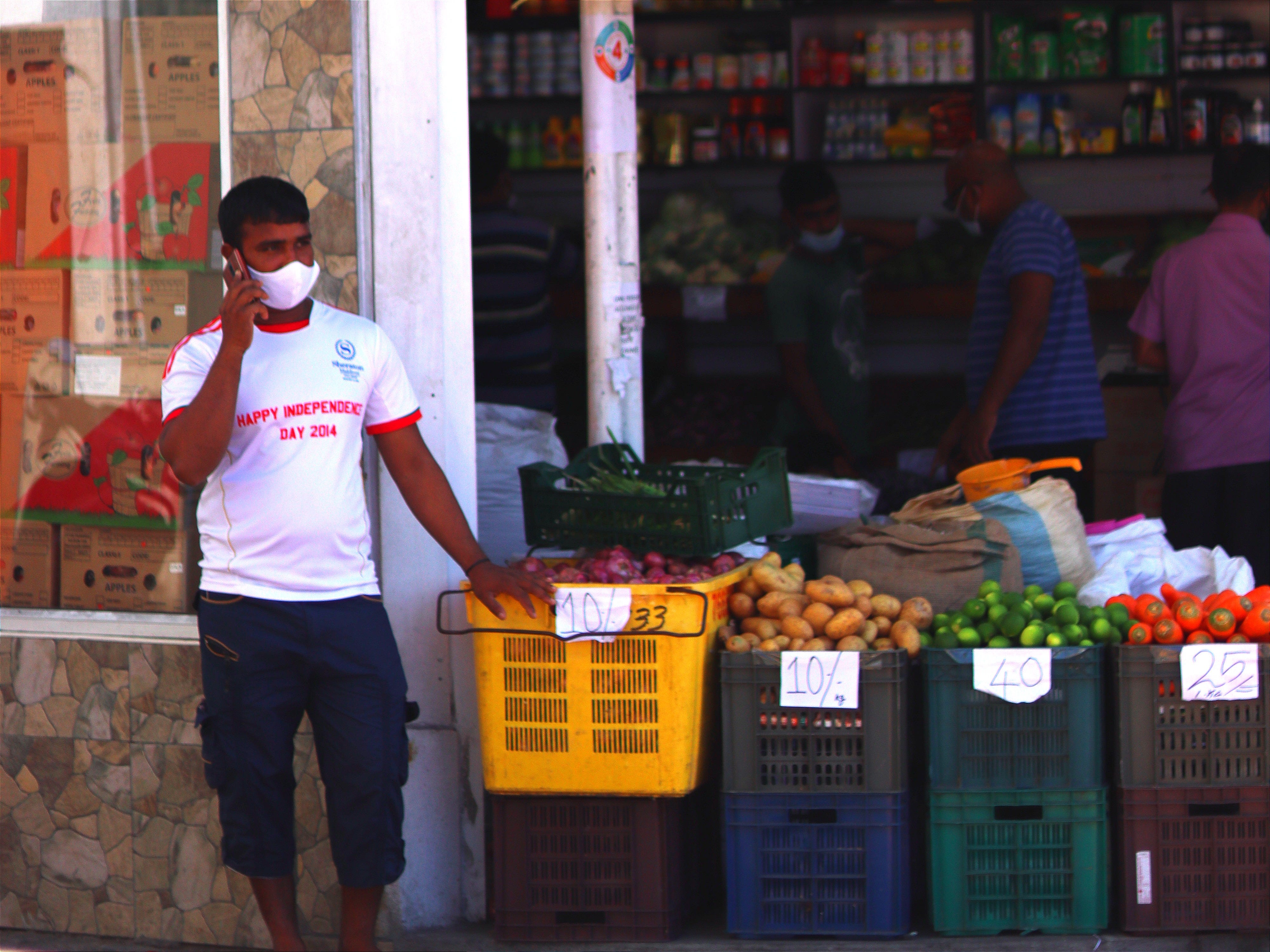
Imagine your standard, mid-week grocery run. You walk in with a crisp 500 rufiyaa note. Currently, that 500 MVR buys you a decent basket of basics: a tray of eggs, a bottle of cooking oil, a whole imported chicken, a packet of Milo for the kids, and maybe some onions and potatoes.
Here is what happens to that exact same basket of food under my two models by the end of the year:
Under Scenario A (The Moderate Squeeze): With inflation running between 7.5% and 9.5%, that 500 MVR basket now costs you between 538 and 548 MVR.
The Reality: It doesn’t sound like the end of the world, but your 500-rufiyaa note no longer covers the bill. To stay on budget, you are standing at the register making compromises. You are putting the Milo back on the shelf, or you are downgrading to a cheaper, lower-quality cooking oil. You are paying the same amount of money for a worse standard of living.
Under Scenario B (The Stagflation Threat): If the black market dollar premium explodes and inflation hits that 12.0% to 18.0% range, things get ugly. That same basket of groceries now rings up between 560 and 590 MVR.
The Reality: You are now paying almost 600 MVR for what used to cost 500. That extra 60 to 90 MVR is essentially a “phantom tax” created by the war effects and the dollar shortage.
And remember, this is just for a single small grocery run. If your family typically spends 5,000 MVR a month on food, Scenario B means you will need to find an extra 600 to 900 MVR every single month just to put the exact same meals on the table. Your salary hasn’t gone up, but your purchasing power has been quietly slashed by the global market.
That 0.4% inflation rate estimated in December feels like a lifetime ago. Over the coming months, it is not only oil prices but also keeping a watch on our tourism numbers. As long as those flights continue to arrive and bring dollars to our shores, we can withstand this challenge. If they slow down, we’re in for a rough ride.