


“You probably think Bloomberg News doesn’t cover coffee. But we actually write a lot about coffee.”
With that line, John Liu—Bloomberg News’s Executive Editor for the Greater China Region, overseeing more than 280 reporters and editors across Hong Kong, Beijing, Shanghai, and Taipei—had the entire room leaning in. He begins his talk on the future of journalism with his favorite morning ritual when speaking to a hall full of journalists at a media event organized by CMG on the sidelines of the APEC 2026 Summit in Shenzhen.
The International Coffee Organization estimates that some 3 billion cups of coffee are consumed daily. But few of us grow our own beans and most of us don’t even live in climates that we could try. Liu points out that the path from tropical farms to roasting facilities to our morning mugs is a remarkable global business story, one that reflects just how closely our everyday lives—from the clothes we wear to the phones in our pockets—are tied to events happening thousands of miles away.
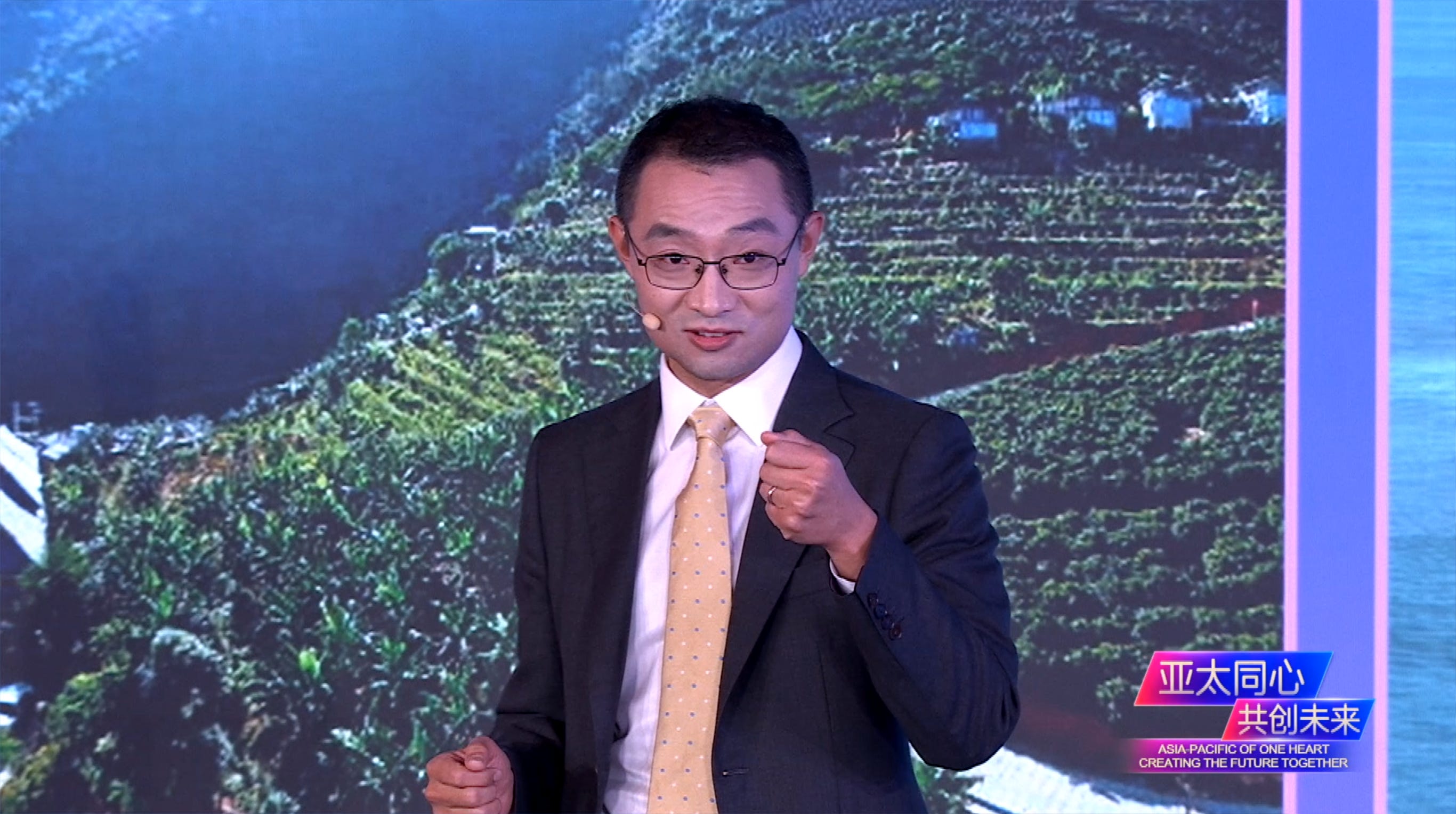
As a coffee lover in that audience, his talk catches my interest. But what stayed with me long after the event was the deeper lesson Liu drew from his more than 20 years covering business, finance, and economics: how journalism has to evolve in an interconnected world where social media is swallowing traditional media space and where misinformation and disinformation travel faster than facts.
Liu’s first observation was deceptively straightforward: every newsroom has to know who it’s talking to.
“We don’t write about what coffee tastes like, we don’t write about the different types of coffee there are,” he said to us. “But we do write about the supply, [demand] and price of coffee beans. So it doesn’t matter what we report. “It’s more about how we cover it, from what angle we cover it—that’s what our audience cares about.”
He didn’t stop with angle. His second observation hit on the core of what makes economic and public-interest reporting really useful: showing both sides of the story, the upside and the downside. “It’s important to tell readers that a region has the perfect soil and climate for coffee, but just as important is telling them that the very same region is experiencing a labor shortage,” Liu said. If you’re a CEO deciding on an investment, or an ordinary citizen trying to understand the economy, you can only make smart decisions if you understand both the opportunities and the risks.
Lastly, he argued for subtlety. “Strange topics, strange places, and strange people—they tend to be shown in a very black and white way,” Liu said. “But the truth is there is very little that is black and white in our world. “The more coverage and reporting the media can do, the more complete a picture we can give our audience.”
Since I heard him in Shenzhen, my mind kept drifting back home, back to our, Dhauru newsroom.
Over the past few weeks, Dhauru has been undergoing a management change and a major overhaul. It feels like a real turning point. In nearly every recent editorial meeting, we’ve asked what changes we will make in delivering stories to our readers and what this new chapter should look like.
I have been a loud advocate of moving away from the traditional way we do journalism in Maldives. Already heavyweights like Mihaaru, Sun and Vaguthu are churning out rapid-fire daily news. It’s a losing game to try and out-run them on every press release, every routine update and every breaking alert with a smaller team and limited resources. Even when you win a race like that by three minutes people hardly notice who crosses the line first.
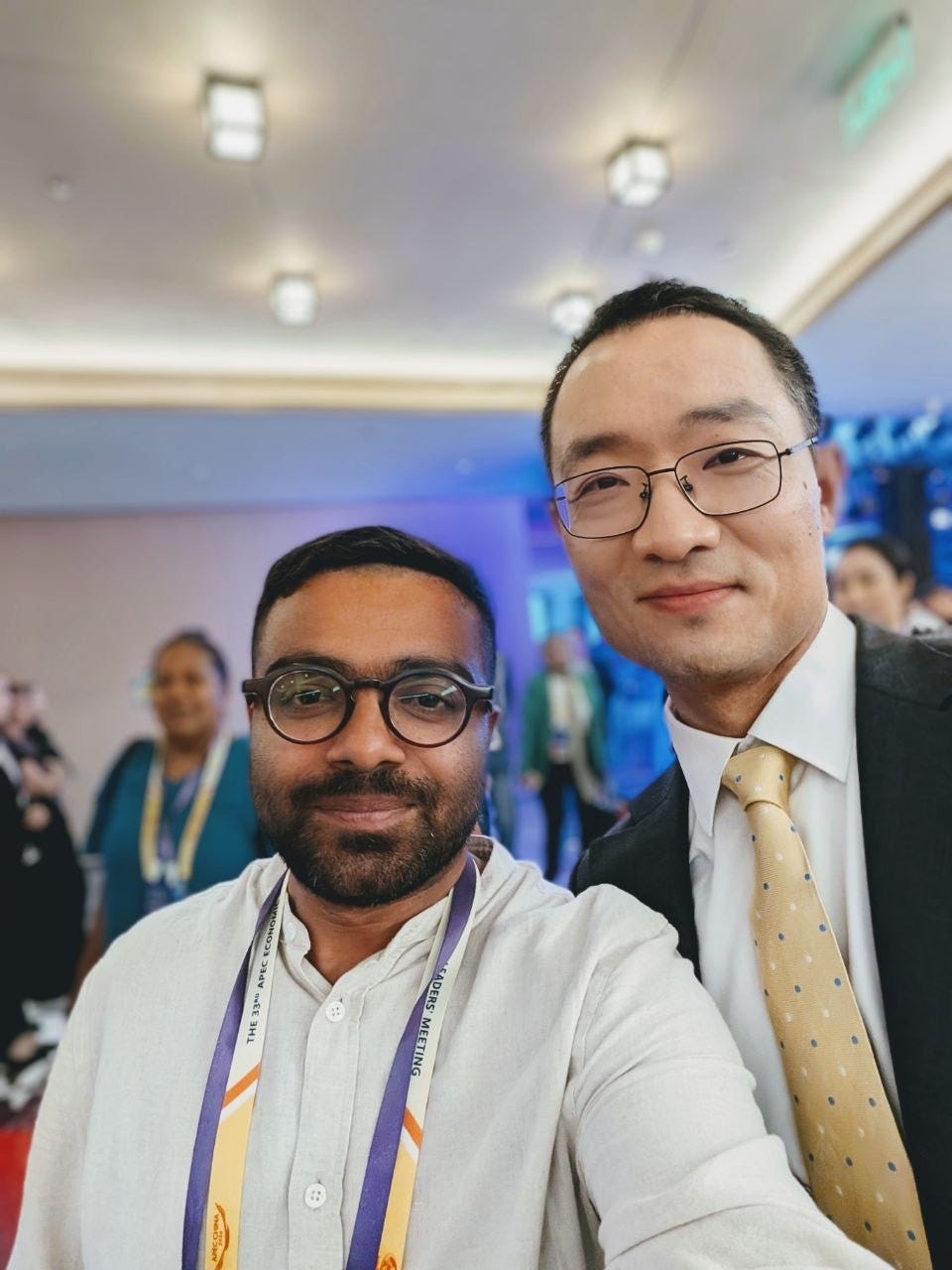
I think John Liu’s coffee lesson is the smarter path forward. Rather than trying to cover everything, we should obsess over how we cover the stories that actually matter to people’s lives. That means diving deep. It means not taking the shallow, black and white headlines at face value but digging up the other side of the story: the hidden risks, the real economic stakes, the human context lost in the daily rush. And just as important, it means breaking the habit of waiting for readers to come to us. If we want to reach a younger generation, we have to go where they already live—reimagining serious, well-reported journalism in the form of TikTok, Instagram, Facebook, and short-form video worlds.
Of course, saying that in an editorial meeting is one thing; convincing everyone to get on board is another.
I won’t pretend there’s not been some resistance to this approach. Newsrooms are creatures of habit. There’s a strong pull to traditional journalism. There is a very real fear when you suggest stepping back from the daily breaking news treadmill that the outlet will lose visibility, traffic, or relevance. Some colleagues fear that to prioritize depth, we’ll publish less frequently, and in a fast-moving media market, the thought of going quiet for even a few hours can feel terrifying.
There’s also a lot of skepticism about social media formats. Many seasoned journalists still see the construction of stories for TikTok or Instagram Reels as perilously close to chasing algorithms or diluting serious reporting to fit a 60-second vertical format. No one who entered journalism to hold power to account wants to feel like they are just making “content”.
I know where that uncertainty is coming from. Building credibility takes years; destroying it takes seconds. Nobody wants to sacrifice substance for viral gimmicks.
But I think the greater risk is standing still while the audience is moving on without us.” Switching the vehicle doesn’t mean dumbing down the journalism. It’s not dumbing down the news to produce a well-reported, 60-second explainer on why the price of everyday goods is rising, and to give the 22-year-old scrolling Instagram the context they never got from a press release. It is doing exactly what Liu reminded us journalism is here to do: “A well told news story can help us understand unfamiliar places and topics better than most other mediums.”
That is the change we have to make, even if it is uncomfortable. We don’t have to be the loudest voice to report the same daily routine as everyone else. We need to understand our audience, discover the angle that only we can provide and tell the bigger story – whether that’s in a long-form feature or on a phone screen.
Because at the end of the day, whether Bloomberg is writing about coffee beans or a Maldivian newsroom is trying to reinvent itself, no one remembers who poured the fastest cup. They remember who gave them something worth tasting.
If you want to hear John Liu’s full speech for yourself, I’ve attached the complete video of his speech above. I recommend you get a cup of coffee and watch it.