


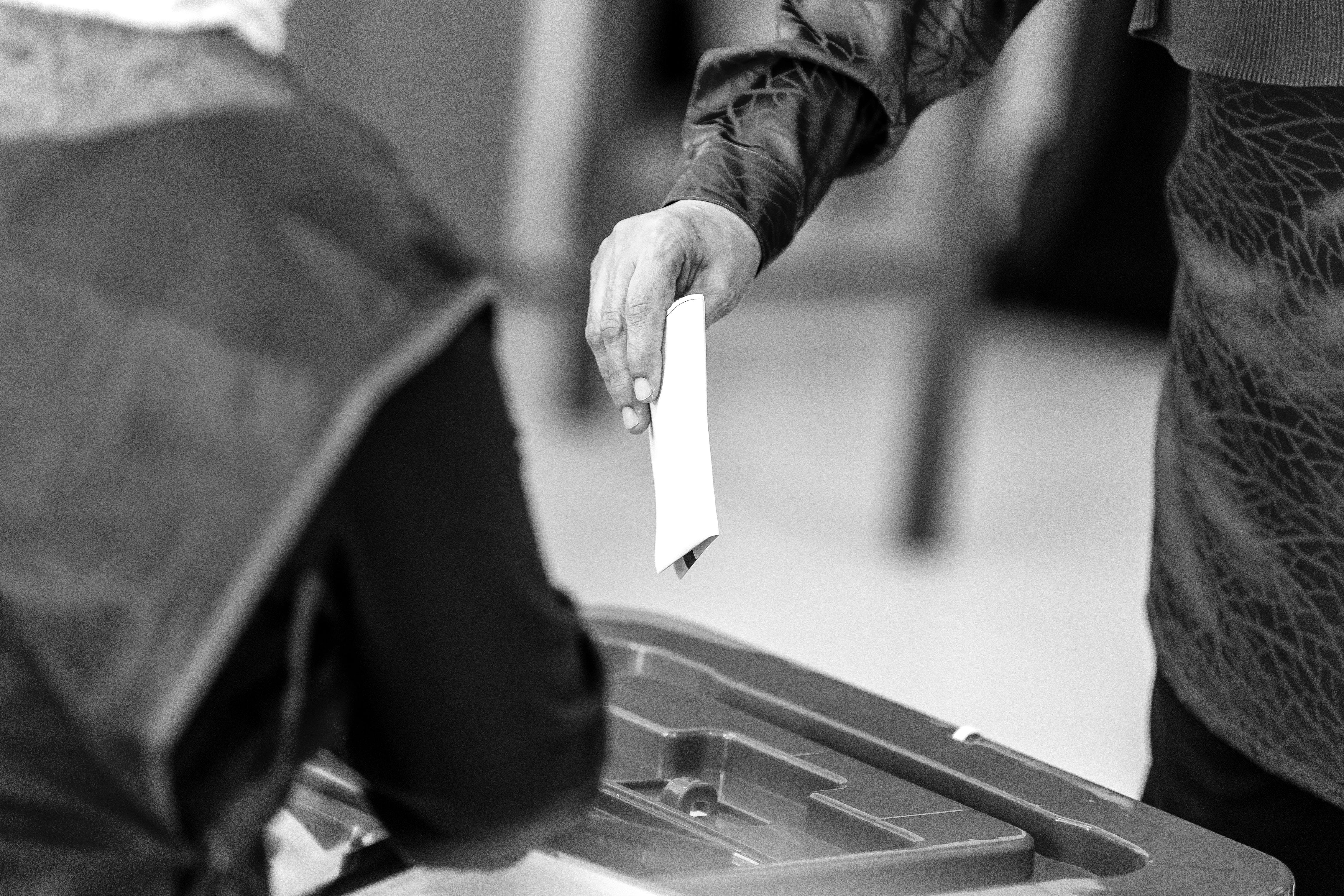
When Maldivians headed to the polls on April 4, 2026, they weren’t just voting for their local councils and Women’s Development Committees. They were handed a critical referendum: should we merge the presidential and parliamentary elections?
The ruling party, PNC, campaigned hard on the premise that merging the elections would save the state millions. But when we strip away the political talking points and look at the actual economics of the 2026 LCE and referendum cycle, a fascinating and vastly unequal financial picture emerges.
The Price of Organizing an Election
Before a single campaign rally is held, the state has to foot the bill for the democratic process itself. Printing ballot papers, deploying officials, and securing ballot boxes across islands doesn’t come cheap.
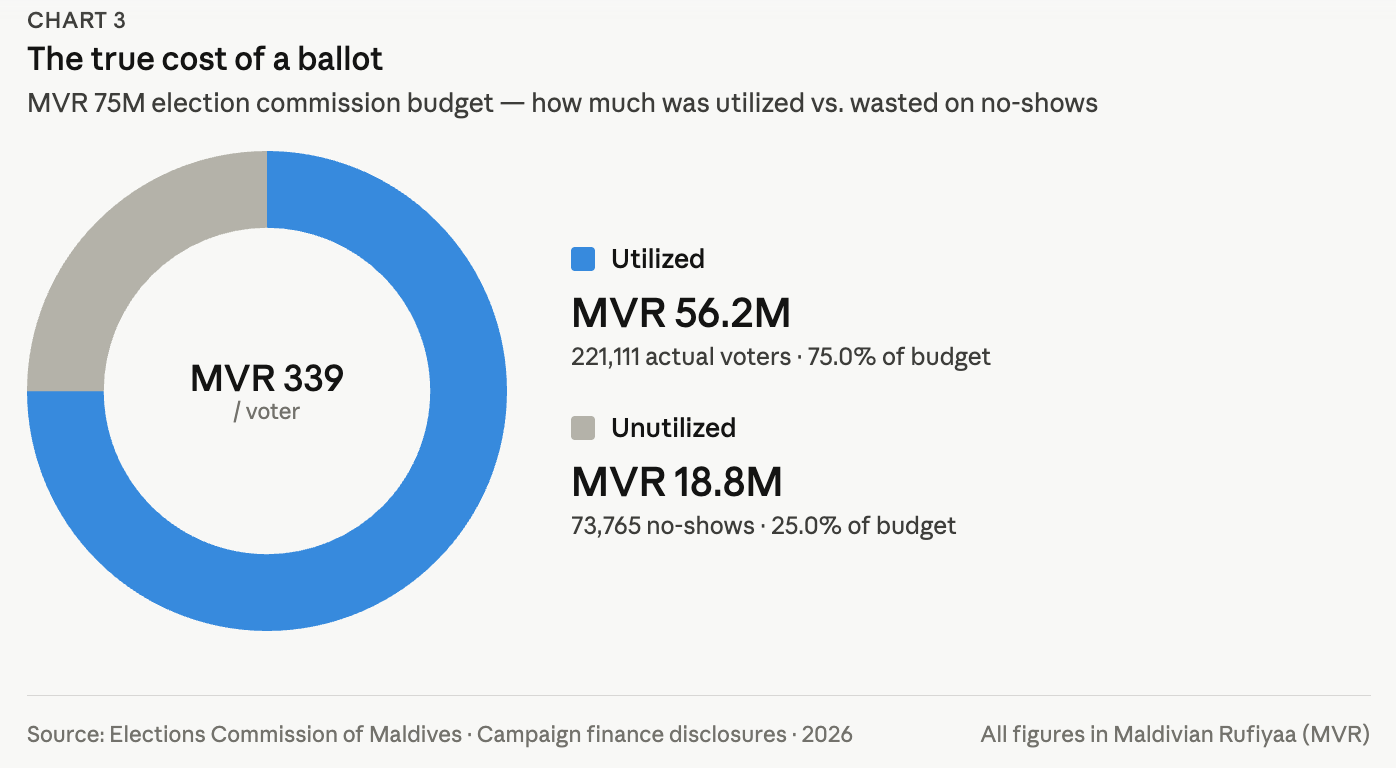
According to the Elections Commission, organizing this specific election cycle cost an estimated MVR 70 to 80 million.
Out of 294,876 eligible voters, 221,111 showed up, a 73% turnout. If we take the midpoint of the EC’s estimate (MVR 75 million) and divide it by the number of people who actually cast a ballot, the logistical cost of this exercise comes out to roughly MVR 339 per voter.
But logistics is just the baseline. The true economic shock is found in the campaign financing.
Campaign Spending by the Numbers
The referendum essentially became a proxy battle between the ruling PNC (campaigning for “YES”) and the opposition MDP (campaigning for “NO”).
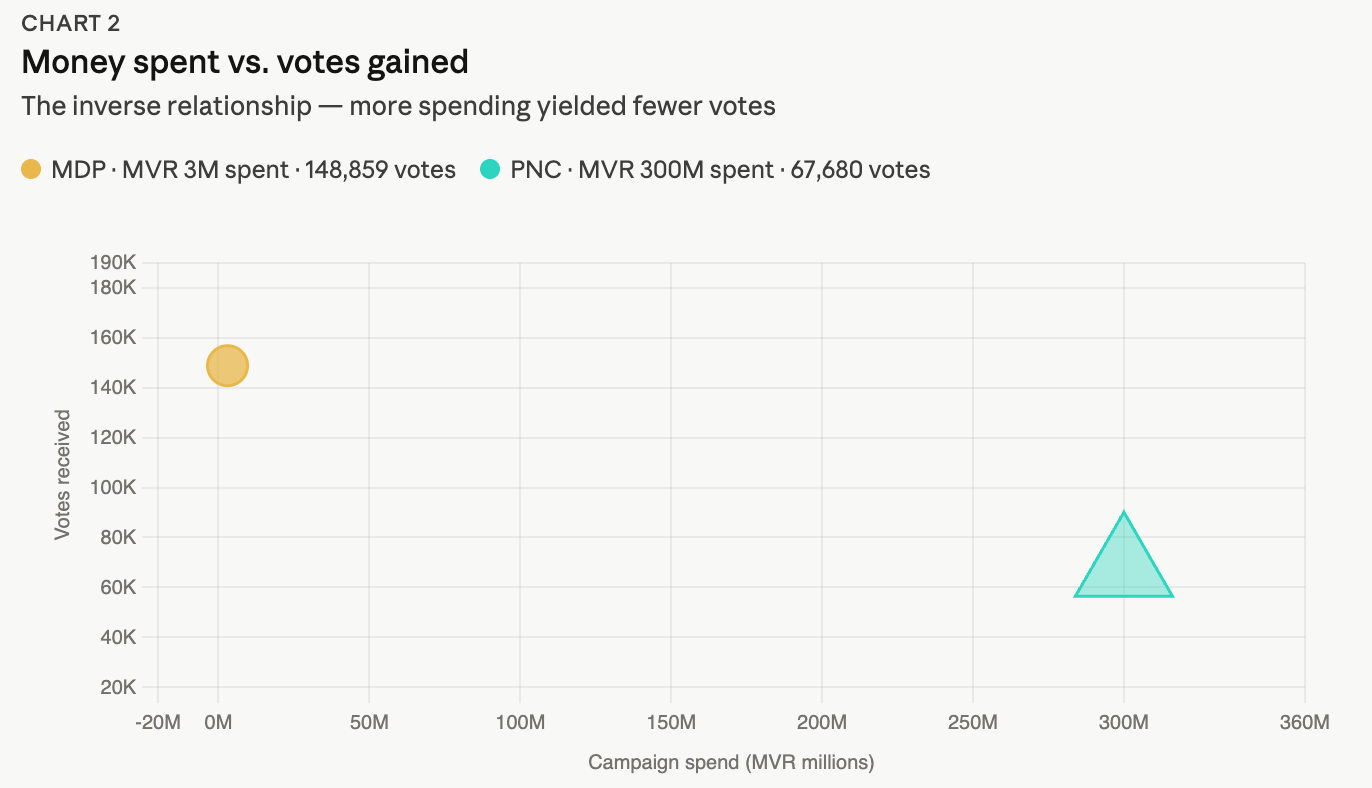
Let’s look at the estimated campaign spending. The opposition MDP operated on a relatively lean budget, as their bank accounts are frozen, estimated at MVR 3 million. The ruling PNC, on the other hand, is estimated to have poured a staggering MVR 300 million into their political machinery to secure a win.
When the dust settled, the results were definitive:
YES (PNC): 67,680 votes (31.26%)
NO (MDP): 148,859 votes (68.75%)
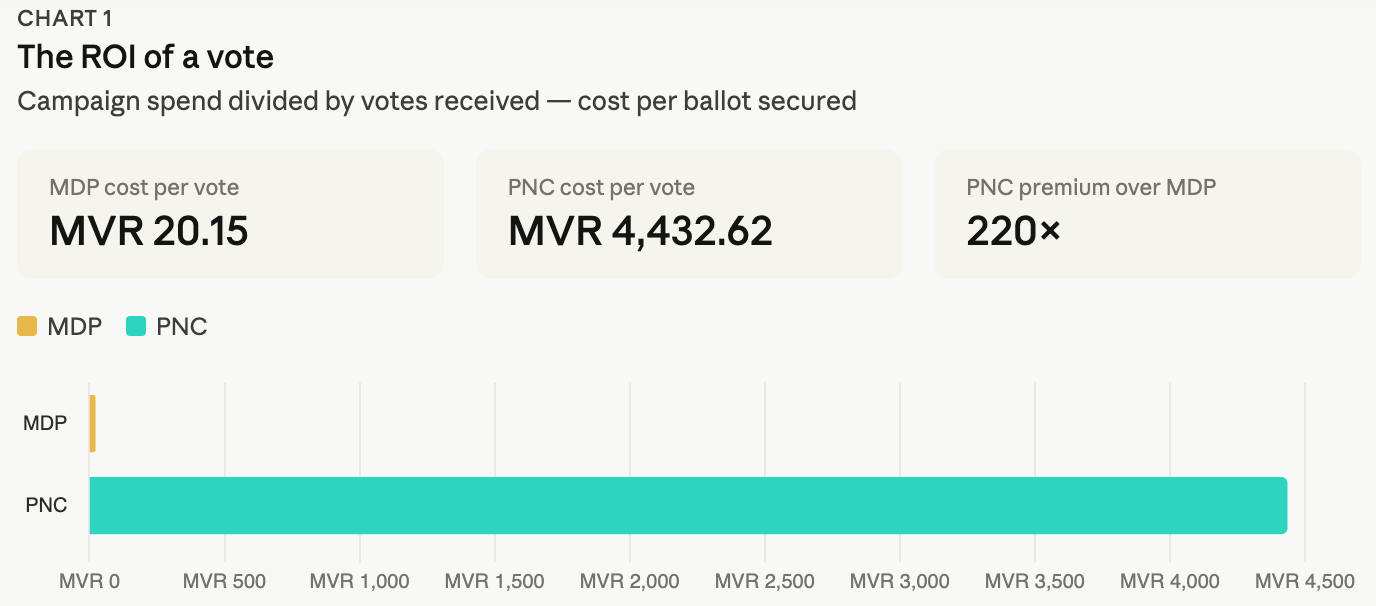
If we treat these results as the ultimate return on investment (ROI) for their respective campaigns, the cost-per-vote reveals a stark contrast.
The ROI of a Vote
For the MDP, their MVR 3 million campaign yielded 148,859 votes. That means the opposition spent exactly MVR 20.15 to secure a single vote. It was a masterclass in grassroots mobilization and organic political momentum.
On the flip side, the PNC’s estimated MVR 300 million campaign war chest only managed to rally 67,680 supporters. That translates to an eye-watering MVR 4,432.62 spent per vote.
The Lesson
The 2026 referendum is a stark reminder that in Maldivian politics, outspending your opponent 100-to-1 does not guarantee a victory. The electorate decisively rejected the referendum, handing the ruling party an expensive lesson in political economics.
A vote, it turns out, costs the state about MVR 339 to print, facilitate, and count. But its political price tag? That depends entirely on whose campaign is footing the bill.