



With World Population Day around the corner, I cannot help but think about a quiet yet monumental brewing crisis in the Maldives: our aging population. To be clear, this is a social and economic crisis in the making.
We are facing a demographic collapse in 10-20 years, according to data. We are rapidly heading for a “super-aged” society. In simple macro-economic terms this means that we will soon have many more elderly citizens dependent on a shrinking base of young, healthy Maldivians. This is the backbone of our economy. We're going to be short of young people to look after our aging population and we are losing the backbone of our economy.
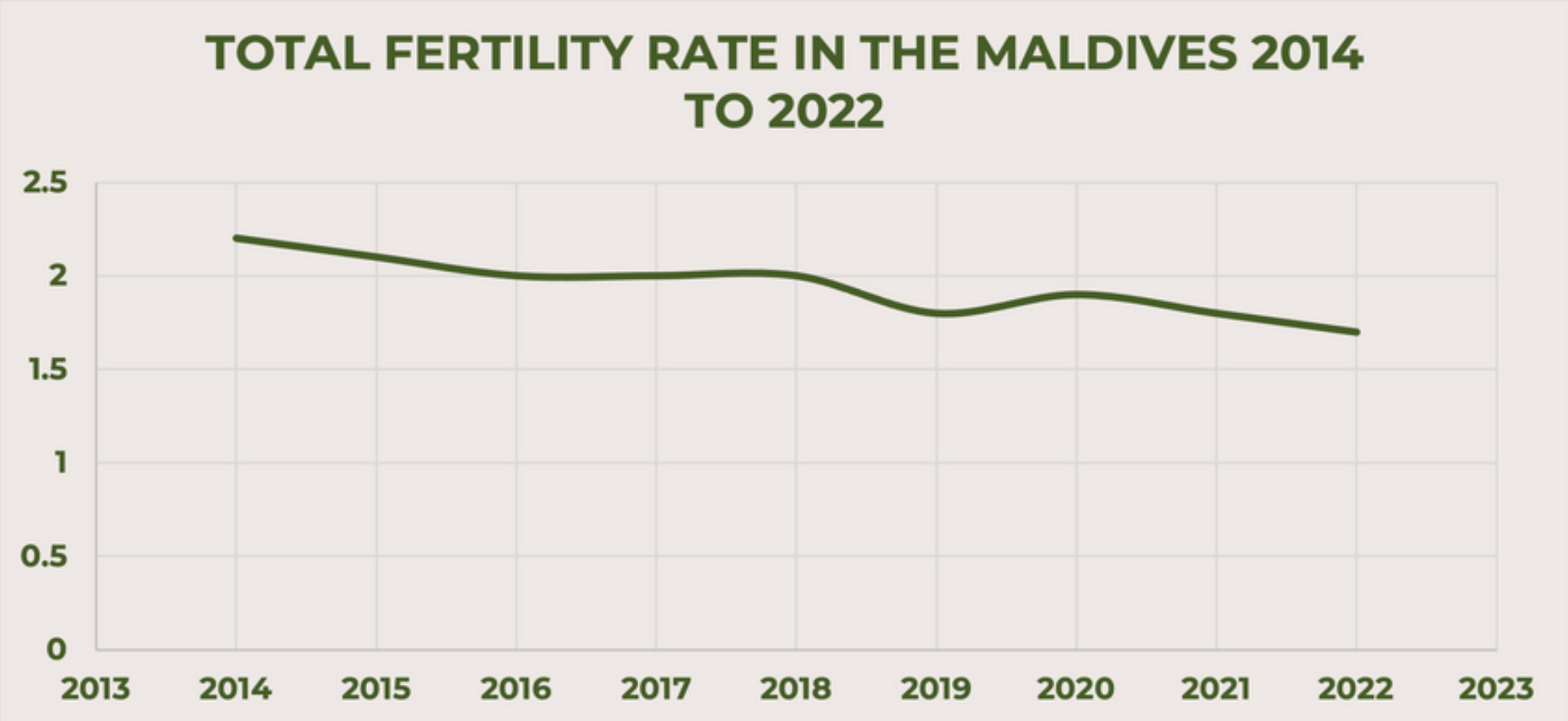
Currently our fertility rate is a precarious 1.5 to 1.8, well below the replacement rate of 2.1. We are on a trajectory that actively charts a course toward economic stagnation. In fact, this impending demographic collapse is one of the most existential threats to our nationality and sovereignty today.
This very debate was put on the table in Episode 29 of Ehbasve Dhebasvamaa: why are young couples increasingly refraining from having children? The answer is rarely in not wanting something . It is not, rather it is a direct signpost to systemic economic barriers.
I have been following the global Pronatalism movement lately, which is a movement that encourages higher birth rates. I disagree with some of the ideas of this ideology, but I do believe there are undeniable truths embedded in it that hold the answers to our local crisis.
A strong domestic workforce is non-negotiable to survive a resilient economy. If we don't turn this around, expatriate workers will surely lead our population in the coming decades. Foreign labor is an integral and appreciable part of our current market. But an almost complete dependence on this will result in huge socio-economic complexities. We need local workers to maintain a stable tax base, to prevent massive capital remittances out of the country, and to pay for the very social safety nets that our aging population will require.
To get to a more sustainable fertility rate of closer to 2.1, we need to tackle the financial bottlenecks that are crippling young families with a vengeance. We can’t just tell citizens to have more children; the government needs to implement strong economic policies that drastically reduce the cost of childcare.
Below are some targeted economic interventions that I believe we can consider:
Targeted Housing and Financial Subsidies: Direct financial benefits and prioritized housing programs targeted specifically at mothers and young families to reduce the immediate financial shock of a new child.
Public-Private Daycare Partnerships: Reliable daycare is a luxury in the Maldives today. What we need are state-subsidized, public-private models that make childcare broadly affordable and accessible, enabling parents – especially mothers – to remain in the active workforce.
Income Tax Waivers: Targeted tax relief or total income tax waivers for active parents to increase their disposable household income.
It is important to point out that the previous government’s introduction of six months of paid maternity leave for civil servants was a commendable step in the right direction. But we have a lot more work to do to really change the shape of our population pyramid.
Understand my argument: I advocate for couples having babies within their financial means. What I am saying instead is that we need to design economic policies that make it so newlywed couples can comfortably afford to have at least one child and that they can realistically afford to have more children without going broke.