


There is someone in your life that shapes you. For some, it’s a teacher; for others, it’s a celebrity. For me it’s My grandmother.
She died on March 27, 2024, at 8:23 pm and the silence she left behind is still hard to deal with. She was a midwife at a time when it was rare for women to work, which is a statistical anomaly. Even though the odds were against her, she did an amazing job for her community, bringing life into the world with hands that were both strong and gentle.
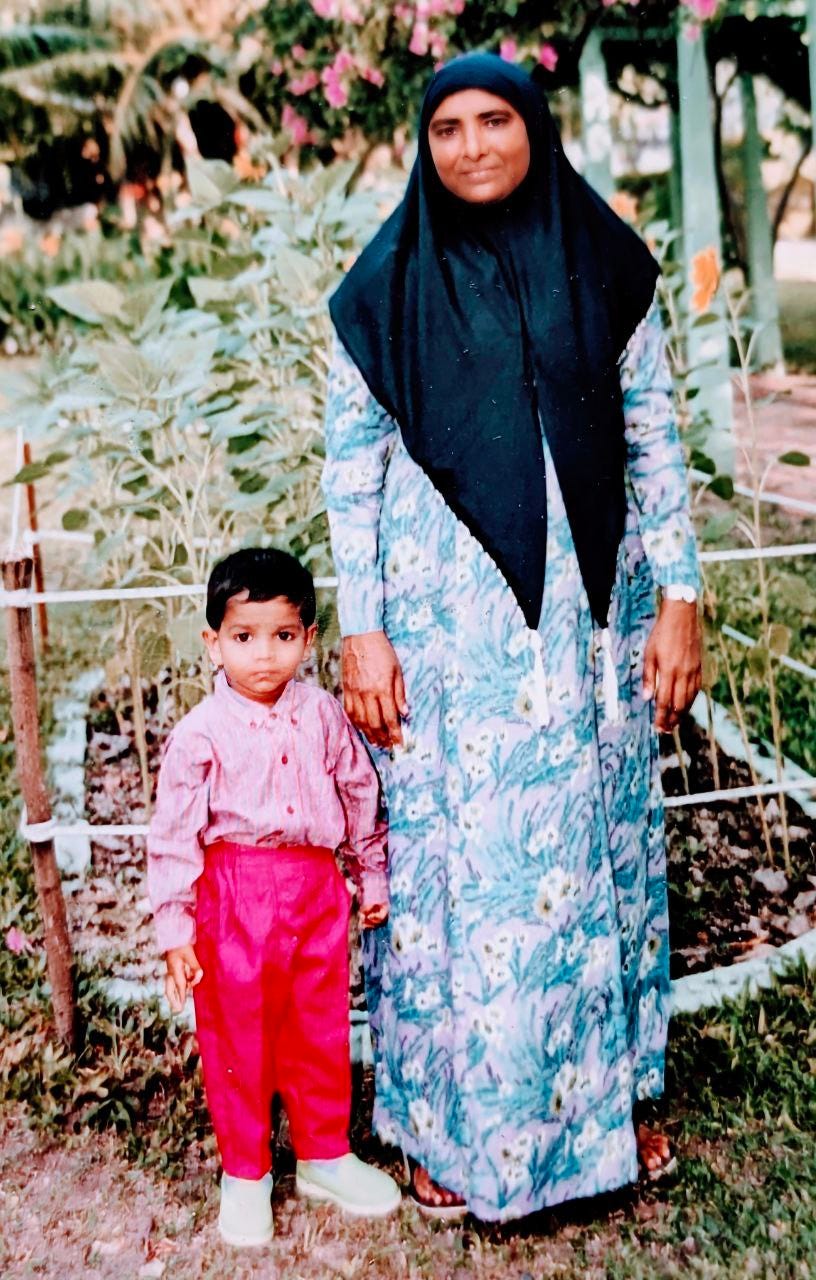
She is the one who inspires me. She is the reason I believe in a moderate feminism. Not a feminism of flashy slogans, but one of hard work, service, and the quiet, stubborn refusal to be pushed aside. Not only did she ask for a seat at the table, she made her own chair.
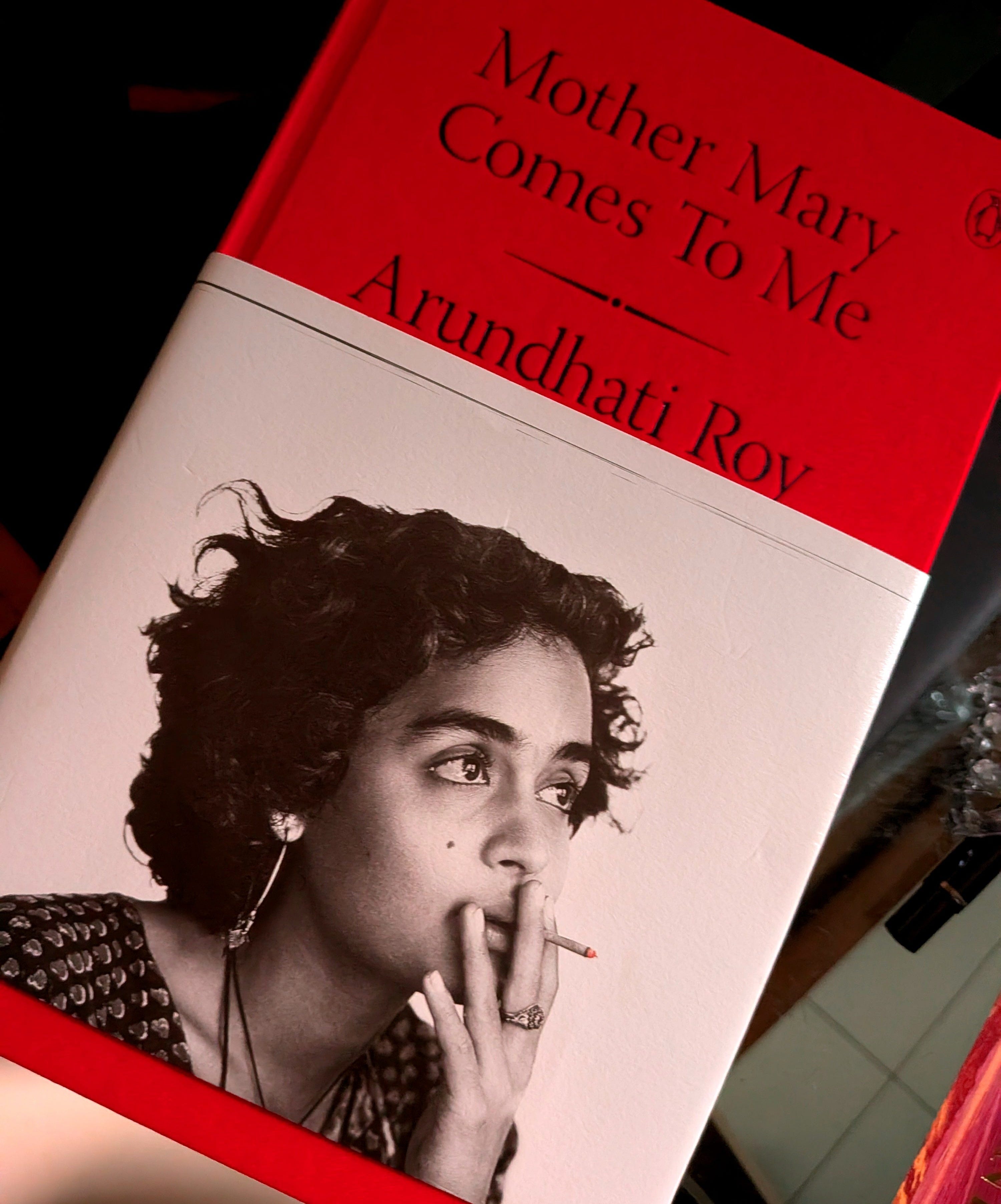
While reading Arundhati Roy’s recent memoir, Mother Mary Comes to Me, I couldn’t stop thinking about her.
Roy is known for her novels that have won the Booker Prize and her fiery political essays, but this book is different. It is a raw, unvarnished picture of her mother, Mary Roy, who was, by all accounts, a force of nature. Mary Roy, like my grandmother, was a woman who wouldn’t let society put her in small boxes. She was a strong-willed teacher and activist who famously sued her own brother to make sure that Christian women in Kerala had the same rights to inherit property as men.
But Roy says she was also scary.
The memoir is not a biography of a saint. It doesn’t make the sharp edges less sharp. Roy talks about a relationship that was unstable and full of both deep love and mental terror. This book is brave because it says that the women who shape us are often not simple. They can be both our heroes and our enemies at the same time.
Roy captures this duality in one of the book’s most powerful passages:
She was my shelter and my storm. She was the one who loved me enough to let me go, but she was also the one who loved me enough to destroy me if I stayed.
I was moved by how honest this was when I read it. We often make the matriarchs in our lives seem like saints by taking away their humanity. Roy won’t do that. She calls her mother a “gangster,” which means that she had to be tough to stay alive and fight battles that hurt everyone around her, even her daughter.
Mary Roy’s life shows how hard it is to fight for women’s rights. She fought for equal rights in the Supreme Court, and her victory changed the lives of thousands of women. But in her personal life, she was messy, hard to deal with, and demanding. Roy writes:
"I have thought of my own life as a footnote to the things that really matter. Never tragic, often hilarious. Or perhaps this is the lie I tell myself. Maybe I pitched my tent where the wind blows strongest hoping it would blow my heart clean out of my body."
Mother Mary Comes to Me is hard to read, but you need to read it. It reminds us that the women who came before us were not perfect. They were people. They carried the pain of their times so that we could carry a little less of it.
I think of my grandmother, who was a midwife. I think about the babies she caught and the mothers she helped. She might not have been as unstable in public as Mary Roy, but she had the same strong backbone. She was the one who gave me strength and rebellion.
I can’t recommend this book highly enough if you want to read something that questions the simple stories of motherhood and feminism. It is a tribute to the “savage grace” of the women who came before us, who were both the shelter and the storm.
Just finished the book. I actually avoided reading your piece until I was done with the book myself, because I wanted to sit with it first without outside thoughts creeping in. But I’m really glad I read your reflection when I did. I loved how you connected the book to your own life and your grandmother. The idea of women being both shelter and storm felt spot-on!